Zorqemivra
How do I choose the right course for my learning needs?
How do I choose the right course for my learning needs?
Each Zorqemivra course focuses on a particular range of Go programming topics. The collection begins with introductory concepts and progresses toward more detailed programming structures and applied exercises. Review the course descriptions and learning objectives to choose materials that match your current knowledge and interests.
Do I need previous programming experience?
Do I need previous programming experience?
Previous experience is not required for introductory courses. More advanced materials build upon concepts explored in earlier stages, so familiarity with basic programming principles may be helpful. Each course description outlines its intended audience and the topics covered.
What will I find inside the courses?
What will I find inside the courses?
Our courses contain structured written lessons, explanations of programming concepts, illustrative code examples, and practical exercises. Topics and learning activities vary depending on the course. The materials are organized to encourage independent study, careful observation, and gradual development of programming knowledge.
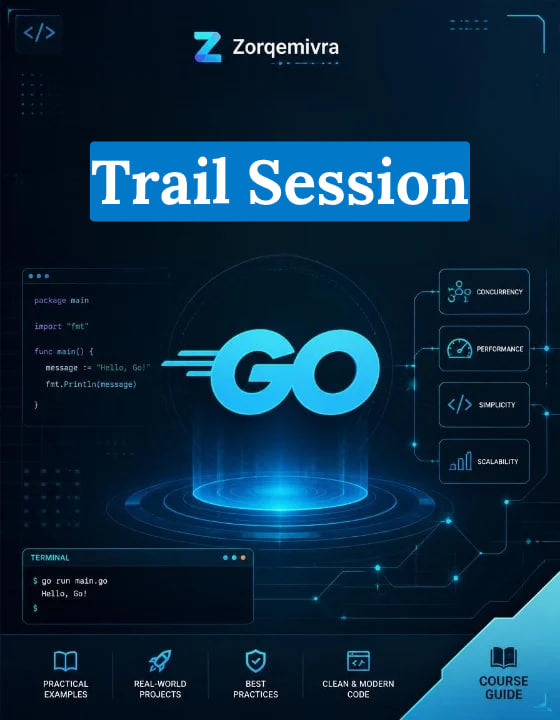
Trail Session
Trail Session
Couldn't load pickup availability
1. Problem Statement
After studying variables and loops, learners often meet situations where a single value is no longer enough. Working with lists of related information introduces questions about indexing, iteration, and choosing a suitable representation. Functions can also become harder to follow when several values are passed between different parts of a program. Data-handling mistakes can produce unexpected results. Learners therefore benefit from studying data organization and program behavior together.
2. Solution
Trail Session introduces related data and reusable program logic through a sequence of explained examples. Each module starts with a small scenario. The lessons show how to arrange that information, inspect individual values, and move data through functions. Practice activities invite learners to predict behavior, make changes, and compare different approaches. A concluding exercise combines these ideas with review questions.
3. What's Inside
Module 1 — Collections in Context
Examine arrays and slices as ways of holding related values. Learn how indexes identify positions, how length affects iteration, and how adding elements changes a slice. Examples use labels and counts.
Module 2 — Making Loops Work With Data
Explore indexed loops and range as two approaches to reading collections. Trace values and identify boundary errors. Exercises include filtering entries and calculating simple summaries.
Module 3 — Organizing Records
Meet structs as named groups of related fields. Examples illustrate records and groups of records. Learners inspect fields, update values, and describe the structure of sample data.
Module 4 — Passing Information Between Functions
Review parameters, returned values, and the difference between modifying a value and working with a returned result. Walkthroughs connect functions to practical tasks.
Module 5 — Applied Data Walkthrough
Build a small record organizer using slices, structs, conditions, and functions. Checkpoints cover input values, summaries, and unexpected output. Reflection prompts invite a written explanation of each stage.
4. Who Is This For?
Trail Session is intended for learners familiar with Go variables, conditions, loops, and basic functions who want to examine data organization more closely. It offers structured practice with connected examples. Prior knowledge of arrays or structs is not required, since the course introduces these concepts through worked examples.
5. What You'll Learn
-
Describe the roles of arrays, slices, and indexes.
-
Iterate through collections using loops and
range. -
Recognize boundary conditions when reading data.
-
Define a struct and work with its fields.
-
Pass collections and records into functions.
-
Compare program output with predicted behavior.
-
Combine multiple data concepts in a small practical exercise.
6. Guarantee
We offer a 30-day money-back guarantee on all paid digital courses and educational materials available through our store.
If you are not satisfied with your purchase, you may request a full refund within 30 calendar days of the original purchase date.
As our courses are delivered digitally, there is no need to return any physical items. Receiving, downloading, or opening the course materials does not affect your eligibility for a refund under this policy.
Refunds will be issued to the original payment method. Processing times may vary depending on your bank or payment provider.
Our 30-day money-back guarantee is provided in addition to your rights under applicable consumer protection laws and does not limit those rights.
Share